Community, Speaking, and Public Work
Why visible work changes which opportunities reach you at all.
Community, Speaking, and Public Work is the only chapter of this book where I am part of the evidence. So the line between what I can show and what I merely believe has to be drawn carefully and kept visible. What I can show is that the work exists. What I believe about its effects is judgement, and I will say so every time.
Key takeaways
- Public work changes the direction opportunity travels. Instead of applying into a filter, specific requests arrive at you, because a stranger can read your reasoning before deciding whether to trust it.
- GitHub's Octoverse report of 28 October 2025 records more than 180 million developers on the platform, 36 million joining in a year, up 23%, and more than 5 million new developers from India, over 14% of new accounts globally.
- A regional conference is infrastructure rather than a line on a CV. I organise Laracon India, whose 2026 edition ran on 31 January and 1 February 2026 at GUCEC in Ahmedabad.
- A community credential should be described as exactly that. The Certification for Laravel programme states on its own site that it is an independent community driven program and that it is not owned or endorsed by Laravel Holdings, Inc., and I sit on its board of advisors.
- The effect of public work on opportunity is my judgement rather than a measured result. I hold no data on it, nobody publishes any, and any writer telling you otherwise is describing their own survivorship.
Read this after Chapter 10, because being on record inside a company and being on record in public are the same discipline with different audiences. Chapter 12 is where public work turns out to be the precondition for two of the three forms of leverage. And Chapter 9's dials apply here too: if your organisation absorbs judgement without trace, external visibility is the compensating move.
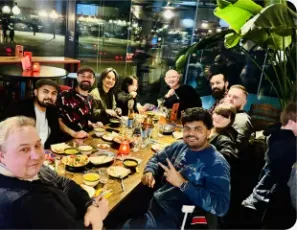
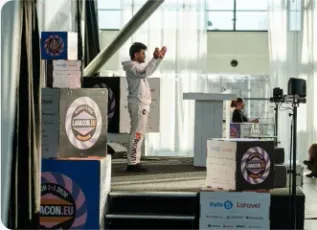
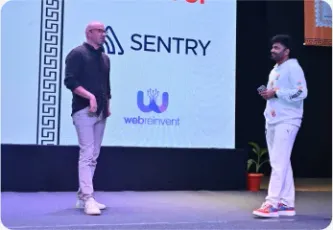
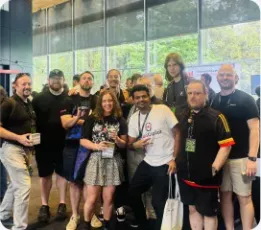
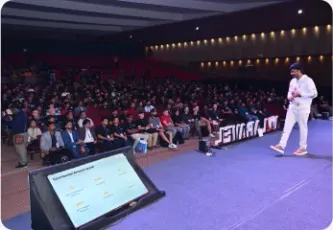
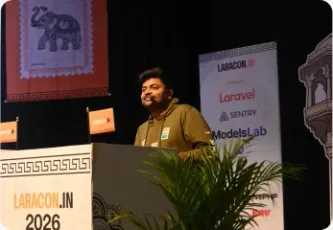
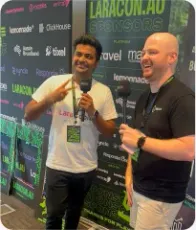
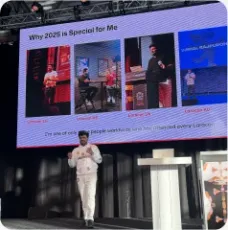
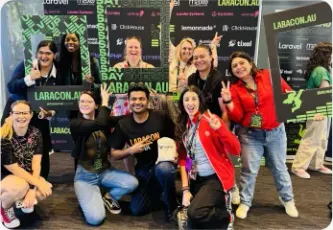
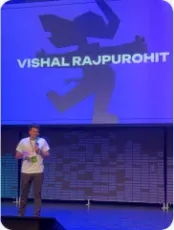
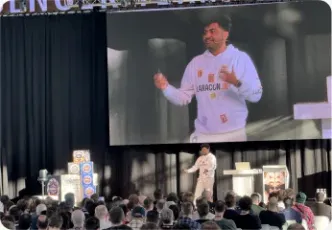
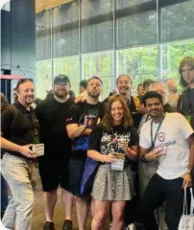
I organise a conference. The 2026 edition of Laracon India ran on 31 January and 1 February 2026 at GUCEC in Ahmedabad, with co-organisers Abbas Ali, Ruchit Patel and Mitul Golakiya. I hosted a session on Laravel as an ecosystem on the first morning and opened the second day.
That is a fact with a URL. What it did for anybody's career, including mine, is not a fact. This chapter will not pretend otherwise.
Public work changes which requests reach you
The definition first, because "personal brand" is the wrong frame and produces the wrong behaviour.
Public work means artifacts outside your employer that a stranger can evaluate without meeting you. Writing that explains a mechanism. A talk with a recording, maintained code somebody else depends on, or a body of answers to other people's problems. The distinguishing property is that it is checkable. A claim on a profile is not public work. A written argument someone can disagree with is.
What it changes is direction. Without it, opportunity flows through filters you enter at the bottom of: applications, recruiters, referrals from people who already know you. With it, some fraction of opportunity arrives unrequested, because somebody read something and formed a view about how you think.
That is the whole mechanism and it is unglamorous. It is not reach, and it has nothing to do with follower counts.
Where the new developers actually are
Any argument about community has to start from where the people are, and the platform data on this is unambiguous.
GitHub's Octoverse report, published 28 October 2025, records more than 180 million developers on the platform, with 36 million joining in the previous year, up 23% year over year, which is more than one new developer per second. More than 5 million of those new developers came from India, over 14% of new accounts globally. The report also notes that 80% of new developers use Copilot in their first week.
Those are first-party figures from GitHub about GitHub, which is the caveat to carry, and they still describe the shape of the profession's next decade. A very large share of the people who will be senior engineers in ten years are starting now, outside the traditional centres, with an assistant in the editor from week one.
I read two consequences off that, and both are judgement. The first is that community infrastructure has to exist where the people are rather than where the conference circuit historically was. The second is that the thing worth teaching that cohort is not tool usage, which they already have, but everything in Chapters 4 through 8.
A conference is infrastructure, not a credential
The reason to organise something rather than only speak at it is that the two produce different things, and only one of them compounds.
Speaking produces a recording and a set of conversations. Organising produces a place where several hundred people who work on the same problems can find each other, which exists whether or not you personally benefit. Laracon India ran its 2026 edition on 31 January and 1 February 2026 at GUCEC in Ahmedabad, and the programme, venue and organiser list are published on the site.
What I will not do is put a number on it. I have no attendance figure to give you, no outcome data, and no measurement of what it produced for anyone. That absence is deliberate, and it is the same discipline Chapter 2 asked of everybody else.
What I can say as judgement is narrow and, I think, defensible. Organising work makes you legible to a specific community in a way that no amount of individual output does, because the work is visible in its execution rather than in its claims. This is the pattern I trust, and I cannot prove it to you.
A community credential should be described as exactly that
There is one place in this chapter where precision is not stylistic, and getting it wrong would undermine the whole argument for credibility.
I sit on the board of advisors of the Certification for Laravel programme. That programme states on its own site that it is an independent community driven program, and that Certification for Laravel is not owned or endorsed by Laravel Holdings, Inc., in its own words. Both statements belong in any sentence describing my involvement. Omitting them would imply a vendor endorsement the programme itself disclaims.
Being the person who states the limitation is the point rather than a caveat. A credential described accurately is worth something to the people evaluating it. The same credential described loosely as official is worth less than nothing once somebody checks, because now your accuracy is the thing in question.
That generalises past certifications. Every claim you make in public is a sample of how carefully you handle claims in private, and the people whose opinion you want are the ones who check.
What I can show, and what I only believe
Here is the boundary, drawn explicitly, because career writing routinely blurs it and I would rather be dull than do that.
What is verifiable: I am the chief technology officer of ViitorCloud Technologies, a role recorded on third-party profiles including Inc42. I founded LaraCopilot. I organise Laracon India and hosted sessions at its 2026 edition. I sit on the board of advisors of the Certification for Laravel programme, which is community-driven and, by its own statement, not endorsed by Laravel Holdings.
What is not verifiable, by me or anyone: what any of that caused. I hold no data on which opportunities arrived because of public work rather than in spite of it, no counterfactual version of the last decade, and no survey of anyone. Nobody publishes such data, and the people who write confidently about the returns on public work are describing one path that happened to work.
So the honest form of the advice is conditional. If your reasoning is not visible outside your employer, the only people who can vouch for it are people who work there, and that is a concentration of risk. Reducing it is cheap. Whether it produces the specific outcome you want is not something I can promise, and I am suspicious of anyone who does.
Three artifacts, and what each one actually costs
Not all public work is equivalent, and the differences are practical rather than moral.
| Artifact | What a stranger can evaluate from it | What it costs |
|---|---|---|
| Writing that explains a mechanism | How you reason, what you consider, whether you handle evidence honestly | Hours per piece, and it must be specific enough to be wrong |
| A talk with a recording | How you handle a room and whether you can compress an argument | Days of preparation, one fixed date, and a much shorter useful life |
| Maintained code others depend on | Whether your work survives contact with other people's needs | Ongoing and unbounded, since maintenance has no end date |
Writing is the highest ratio of evidence to effort, which is why I would start there. Maintained code is the strongest signal and the most expensive commitment, and taking it on lightly is how people acquire a second job they cannot resign from.
The smallest version that still counts
The reason most people never start is that they are comparing themselves to the largest version of this, which is a mistake about mechanism.
The smallest useful unit is one page that explains one mechanism you understand better than the average reader, written specifically enough to be wrong. A decision record you can publish. A trace of one failure and its cause. The narrowing of one ambiguous problem from Chapter 8. None of that requires an audience, a schedule or a brand.
The property that makes it work is specificity, not volume. A single precise piece about a failure mode you actually debugged does more than fifty general posts, because the precise one can only have been written by somebody who did the work.
And the internal version comes first. Everything in Chapters 6 and 7 is public work with a smaller audience, so if you are writing specifications and decision records already, the step outward is a change of venue rather than a new skill.
The objection: this is survivorship bias
It is, and treating that as a fatal objection rather than a real one is where most writing on this subject cheats.
The strongest version runs like this. You see the people whose public work coincided with good outcomes, you do not see the far larger number who wrote for years and got nothing, and the visible cases had advantages that the writing did not cause. That is correct as a description of the evidence available, and I cannot refute it with data because no data exists.
What survives the objection is the mechanism rather than the outcome distribution. Public work does one thing reliably: it makes your reasoning available to people who have not met you. Whether that produces an opportunity depends on factors outside anybody's control, and nothing about it is guaranteed.
Which leaves a modest claim, and modest is what the evidence supports. The cost of one page a month is low, the artifacts are portable in the way internal reputation is not, and the downside is time. In my experience it is the highest-variance and lowest-cost item in this whole book, and I would still do it, while telling you plainly that I cannot show you the counterfactual.
Chapter summary
Public work means artifacts outside your employer that a stranger can evaluate without meeting you, and its distinguishing property is that it is checkable rather than claimed. What it changes is the direction opportunity travels, from applying into filters towards some fraction of requests arriving unrequested. GitHub's Octoverse report of 28 October 2025 records more than 180 million developers on the platform, 36 million joining in a year, up 23%, more than 5 million new developers from India at over 14% of new accounts globally, and 80% of new developers using Copilot in their first week. The next cohort is arriving outside the traditional centres with assistance from week one. Organising is different from speaking, because it builds a place that exists independently of whether you benefit, and Laracon India's 2026 edition ran on 31 January and 1 February 2026 at GUCEC in Ahmedabad. Precision about credentials is load-bearing, so the Certification for Laravel programme is described here as its own site describes it, an independent community driven program not owned or endorsed by Laravel Holdings. The boundary between the verifiable and the believed is stated explicitly, because I can evidence that the work exists and nothing about what it caused. No such data exists for anyone. Of the three artifacts, writing has the highest ratio of evidence to effort. The smallest useful unit is one page explaining one mechanism specifically enough to be wrong. And the survivorship objection is correct about the evidence and does not touch the mechanism.
Chapter 12 is where public work stops being reputational and starts being structural. Leverage: Consulting, Products, Equity examines three ways to stop selling hours, what each one costs, and why the evidence base for this subject is thinner than anyone selling you a course will admit.
Sources
- Octoverse: a new developer joins GitHub every second as AI leads TypeScript to number oneGitHub · 2025-10-28 · Vendor engineering · verified
- Laracon India 2026Laracon India · 2026 · Official documentation · verified
- Certification for LaravelCertification for Laravel · 2026 · Official documentation · verified
- Vishal Rajpurohit profileInc42 · 2026 · News · reported
Let's talk about what you're building.
Book a short call with Vishal, no pitch, just a conversation.